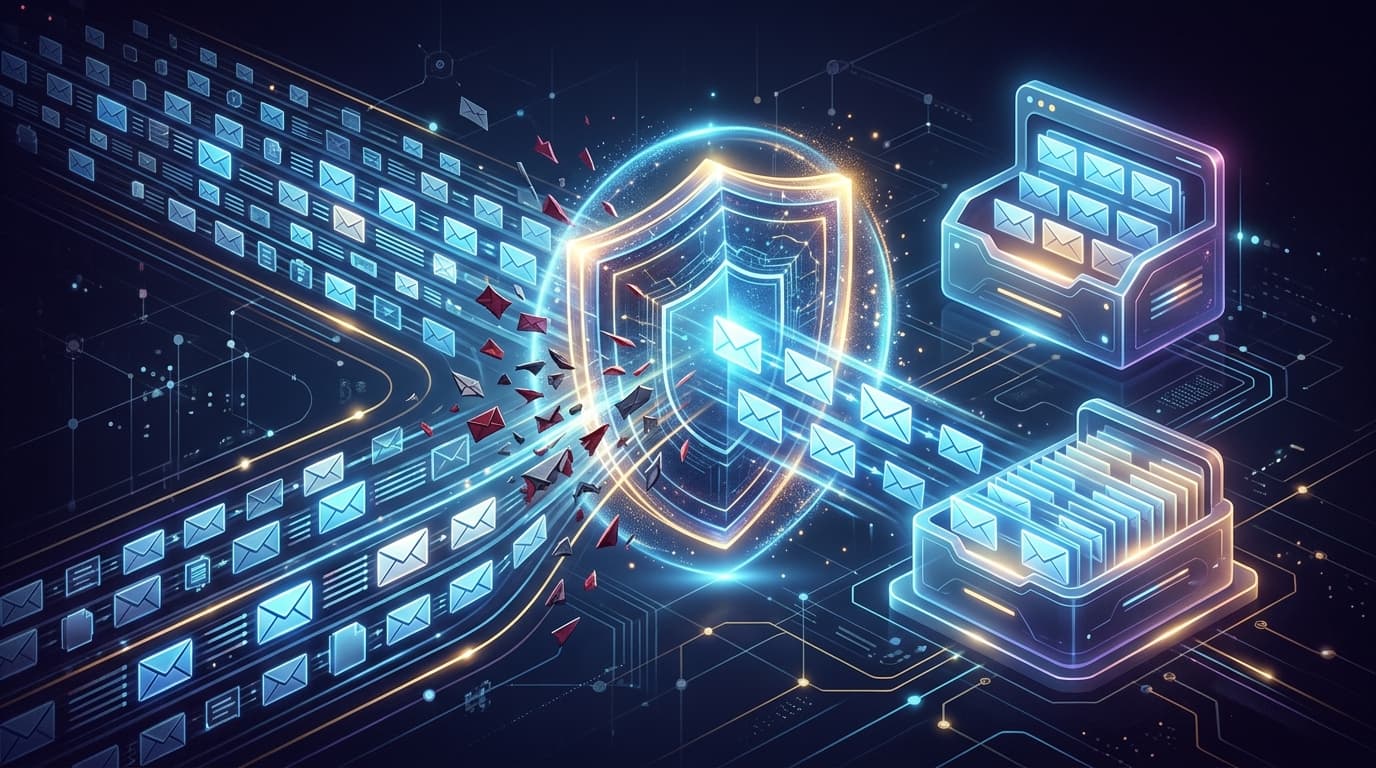
In today's dynamic and competitive digital landscape, email deliverability is no longer just a marketing goal, but an essential condition for the survival and growth of any online business. Every email that doesn't reach the recipient's inbox is a lost opportunity: a potential customer not reached, a missed sale, a crucial message ignored. For businesses, especially e-commerce and those heavily relying on email marketing for acquisition, nurturing, and retention, this directly translates into a negative impact on ROI. The problem is amplified by the natural tendency of email lists to deteriorate over time, accumulating invalid, inactive addresses, or, worse still, spam traps that can irreversibly compromise sender reputation.
The challenge has become even more pressing with the recent changes to Gmail and Yahoo policies, which came into effect in February 2024. These email giants, which together handle a significant share of global email traffic, have drastically tightened the rules for bulk senders. This means that proactive list cleaning and validation are no longer a strategic option, but a critical necessity and a technical prerequisite to continue communicating effectively. Ignoring these new directives risks having your emails flagged as spam, blocked at the server level, or even having your entire sender reputation compromised, with disastrous consequences for your ability to reach customers and prospects. This directly threatens campaign effectiveness, customer relationships, and ultimately, business profitability.
In this article, we will explore in detail how automated email list cleaning can transform this challenge into a sustainable competitive advantage. It's not just about reactively removing "bad" addresses, but about implementing an intelligent, proactive, and continuous system that ensures every message sent has the highest probability of reaching its target, protecting your brand's reputation and maximizing the return on investment of your email marketing strategies. We will cover concrete operational steps for implementation, common mistakes to avoid, how to measure the impact of these actions, and when it's appropriate to seek support from industry specialists to navigate technical complexity.
Why Proactive Email List Cleaning Is Now Essential: The New Rules of the Game
Related deep dives: Advanced Email Segmentation Automation: Real-Time Personalization for Ecommerce · Proactive Email Deliverability Monitoring for Ecommerce: Server-Side Strategies
Email list cleaning has always been considered a best practice, but the recent changes introduced by Gmail and Yahoo in February 2024 have elevated it to a fundamental technical and strategic requirement. These new policies are designed to improve user experience by drastically reducing spam, unwanted emails, and phishing attempts. For bulk senders – meaning anyone sending more than 5,000 emails per day to Gmail or Yahoo addresses – tolerance for invalid addresses, high complaint rates, and poor authentication has drastically decreased. Key requirements imposed by these providers include:
- Strong and Consistent Authentication: It is mandatory to correctly implement and maintain email authentication protocols such as SPF (Sender Policy Framework), DKIM (DomainKeys Identified Mail), and DMARC (Domain-based Message Authentication, Reporting, and Conformance). These systems verify the sender's identity and ensure that the email has not been altered during transit. A DMARC configuration with "enforcement" policies (p=quarantine or p=reject) is strongly recommended.
- Low Spam Rate: Senders must maintain an extremely low spam complaint rate, ideally below 0.1% and strictly below 0.3%. Exceeding this threshold can lead to serious deliverability issues, including direct routing of emails to the spam folder or complete blocking.
- Easy and Fast Unsubscribe: It is now mandatory to offer a one-click unsubscribe option in the email header (List-Unsubscribe header), and this request must be processed within two business days.
- Sending to Valid and Engaged Addresses: It is crucial to avoid sending emails to non-existent, inactive addresses, or spam traps. This implies continuous validation and proactive removal of invalid or unengaged contacts.
These requirements are not mere suggestions, but actual benchmarks that, if not met, can lead to total email blocking, direct routing to the spam folder, or, in the worst case, the permanent blacklisting of the sender's domain. For an e-commerce or a business that relies on email for transactional (order confirmations, shipping), promotional (offers, newsletters), or nurturing (lead generation, follow-up) communications, this is an unacceptable risk that can paralyze operations and destroy customer relationships.
The Direct Impact on Email Campaign ROI and Brand Reputation
Every email sent to an invalid address is a wasted cost. Email service providers (ESPs) often charge based on the number of emails sent or the number of active contacts on the list. Maintaining a list full of "dead" addresses means paying for a service that produces no value, reducing the efficiency of your marketing budget. Conversely, a clean and segmented list ensures that your messages reach genuinely interested and active people, drastically increasing the likelihood of opens, clicks, and ultimately, conversions. This translates into a significantly higher ROI for every email marketing campaign.
Furthermore, a good sender reputation, built on clean lists, responsible sending practices, and robust authentication, is an invaluable asset. It ensures that your messages are seen as authoritative and trustworthy by providers and users, distinguishing you from the competition and strengthening customer trust. A compromised reputation is difficult and costly to recover. To delve deeper into email marketing strategies and how to optimize your campaigns, you can consult our complete guide to e-commerce email marketing, where we also cover aspects of deliverability and automation.
Automated Strategies for a Consistently Clean and High-Performing Email List
The manual approach to list cleaning is inefficient, slow, and prone to errors, especially for large lists. Automation is key to maintaining constant, proactive, and scalable hygiene. Here are the fundamental operational strategies:
1. Real-time Email Validation at Signup
The first and most effective step towards a clean list is to prevent "bad" addresses from entering in the first place. Implement a real-time email validation service directly on your signup form (website, landing page, pop-up). This system, via API, instantly verifies the address syntax, domain existence, presence of valid MX records, and, in some cases, the reputation of the address itself. It blocks addresses with common typos (e.g., "gmil.com"), non-existent domains, disposable email addresses, or addresses known to be spam traps. This drastically reduces bounce rates and complaints from the source, improving overall list quality and sender reputation.
2. Scheduled and Automated Cleaning of Existing Lists (Batch Cleaning)
Even with real-time validation, lists deteriorate. People change jobs, abandon email accounts, or addresses become inactive. It is crucial to schedule regular automated cleanings (e.g., quarterly or semi-annually) using specialized email cleaning services. These services analyze the entire list and identify and remove:
- Hard Bounces: Permanently undeliverable addresses (e.g., non-existent accounts). These must be removed immediately.
- Repeated Soft Bounces: Temporarily undeliverable addresses (e.g., full inbox) that persist over time after several sending attempts.
- Inactive or Unengaged Addresses: Contacts who have not opened or clicked emails for a prolonged period (e.g., 6-12 months).
- Spam Traps: Honeypot addresses used by providers to identify spam senders.
- Duplicate Addresses: To avoid multiple sends and optimize costs.
Many email marketing tools offer native API integrations or third-party connectors with validation and cleaning services, allowing for seamless workflows and automated list management.
3. Advanced Segmentation and Automated Re-engagement Strategies
Not all "inactive" addresses should be immediately deleted. A sophisticated strategy involves segmenting your list based on engagement level (opens, clicks, recent purchases). For less active but potentially valuable contacts, implement automated re-engagement campaigns. These email sequences, triggered after a period of inactivity, can offer special incentives, exclusive content, surveys to understand preferences, or explicitly ask if they wish to remain on the list. If they do not respond after a series of well-defined attempts, consider removing them or moving them to a suppression list to protect your sender reputation. This data-driven approach allows you to recover valid contacts before proceeding with their permanent deletion.
4. Automated Unsubscribe and Complaint Management
Ensure that the unsubscribe process is immediate, transparent, and compliant with current regulations (such as Gmail/Yahoo's one-click unsubscribe requirement and GDPR). Every unsubscribe request must be handled automatically and the contact removed from the main sending list as quickly as possible. Similarly, spam complaints must be carefully monitored (via feedback loops provided by ESPs) and contacts who generate them immediately added to a suppression list to prevent future sends. Timeliness in these operations is crucial for maintaining a good sender reputation.
Common Email List Management Mistakes and How to Avoid Them
Even with the best intentions and the adoption of automation tools, businesses can make mistakes that severely compromise deliverability and campaign effectiveness. Being aware of these pitfalls is the first step to avoiding them and building a resilient email marketing strategy.
1. Ignoring Soft Bounces or Managing Them Inadequately
A common mistake is to focus solely on hard bounces, which are clearly invalid addresses. Soft bounces (e.g., full inbox, server temporarily unavailable, email too large) may seem less serious because they indicate a temporary problem. However, if an address generates repeated soft bounces over time, it indicates a persistent problem or an abandoned account. Many ESPs automatically remove hard bounces, but managing soft bounces requires more sophisticated logic. It is crucial to set up automatic rules in your email marketing platform to remove or quarantine addresses that generate repeated soft bounces after a certain number of attempts (e.g., 3-5 consecutive soft bounces). Ignoring these signals can damage sender reputation as much as hard bounces.
2. Relying on One-Time Cleanups or Not Cleaning the List at All
Email lists constantly deteriorate due to job changes, account abandonment, typing errors, or even the creation of spam traps. Relying on "one-time" cleanups (e.g., once a year) or, worse, not cleaning the list at all is a recipe for disaster. Automated and regular cleaning, integrated into your workflow, is the only way to maintain optimal hygiene. Schedule full cleanups (batch cleaning) at least twice a year, in addition to real-time validation and continuous management of bounces and unsubscribes. Proactivity is key.
3. Purchasing Email Lists or Collecting Them Without Explicit Consent (Opt-in)
This is one of the most damaging, ethically questionable practices and a direct violation of privacy regulations (such as GDPR, CCPA) and the acceptable use policies of almost all ESPs. Purchased lists or those collected without explicit and verified consent (double opt-in) are almost always full of invalid addresses, spam traps, and contacts who have never given permission to receive your emails. Sending to these lists will destroy your sender reputation in record time, lead to extremely high complaint rates, and immediate blocking by providers. Always build your list organically, with explicit, transparent, and verified consent. There is no shortcut to a quality list.
4. Lack of Adequate Email Authentication (SPF, DKIM, DMARC)
Failing to correctly configure or keep updated SPF, DKIM, and DMARC records for your sending domains is a serious technical error. These protocols are fundamental for signaling to email providers that your messages are authentic and come from a legitimate source. Without them, your emails are much more likely to be classified as spam or rejected. Ensure they are implemented and configured correctly for all domains and subdomains used for sending emails. If you need technical support for these complex configurations, our technical consulting services can help you ensure compliance and maximum deliverability.
Measuring the Impact and ROI of Email List Cleaning
Implementing automated email list cleaning is not just a matter of compliance and problem prevention, but a strategy that brings tangible and measurable benefits to your business. Measuring these benefits is essential to justify the investment, further optimize your tactics, and demonstrate the value of your actions.
Key Performance Indicators (KPIs) to Monitor:
- Deliverability Rate: The percentage of emails that actually reach recipients' inboxes. A significant increase in this rate is the most direct and important sign of a cleaner list and improved sender reputation.
- Open Rate: A cleaner list means your emails reach real and interested people. This translates into higher open rates, as your messages are not lost in spam and are sent to a more engaged audience.
- Click-Through Rate (CTR): With better deliverability and a more engaged audience opening your emails, the CTR should improve, indicating greater interest in your content, offers, and calls-to-action.
- Conversion Rate: The ultimate goal of many email campaigns. More people opening and clicking means they are more likely to take the desired action, whether it's a purchase, a download, an information request, or filling out a form. An increase in conversion rate demonstrates a direct impact on revenue.
- Bounce Rate: A significant decrease in hard and soft bounces is a clear indication of the effectiveness of list cleaning. Monitor both to ensure invalid addresses are systematically removed.
- Spam Complaint Rate: Keeping this rate well below the 0.3% threshold imposed by Gmail and Yahoo is crucial for sender reputation. A decrease is a strong indicator of a healthy list and a satisfied audience.
- Sending Costs: By reducing the number of emails sent to invalid or inactive addresses, you save on email marketing platform costs, as most ESPs charge based on sending volume or the number of active contacts. This direct saving contributes to ROI.
- Sender Reputation (Sender Score/Reputation Score): Many tools and services offer metrics on sender reputation. An improvement in these scores indicates that email providers consider your sends more trustworthy.
By monitoring these KPIs before and after implementing automated cleaning strategies, you can quantify the improvement, demonstrate positive ROI, and identify areas for further optimization in your email marketing campaigns. Use dashboards and reporting from your email marketing platform or external analytics tools to track this data over time. Continuous measurement is fundamental for iterative improvement.
When to Seek Expert Support for Email List Cleaning Automation
Automating email list cleaning may seem like a straightforward process in theory, but practical implementation, especially for large lists, with complex infrastructures, or in intricate e-commerce contexts, can present significant challenges. If your company finds itself in one of the following situations, it might be an opportune time to consider the support of industry specialists:
- Large and Highly Complex Lists: If you manage lists with hundreds of thousands or millions of contacts, manual management is impractical, and integrating multiple tools and automation logics can become extremely complex without specific expertise.
- Persistent Deliverability Issues: If, despite internal efforts, your emails continue to land in spam, bounce rates remain high, or your sender reputation is compromised, there might be a deeper problem in configuration, sending practices, or integrations that requires expert diagnostic analysis and intervention.
- Complex System Integrations: Integrating real-time email validation services with your CRM (e.g., Salesforce, HubSpot), marketing automation platform (e.g., ActiveCampaign, Braze), CDP (Customer Data Platform), or your e-commerce system (e.g., Shopify, Magento) may require specific technical skills to ensure seamless data flow, accurate synchronization, and effective automated management.
- Lack of Internal Resources and Technical Expertise: If your marketing or IT team lacks the time, specific technical skills, or experience needed to design, implement, and manage a robust automated cleaning system compliant with new regulations, relying on external experts can ensure rapid, effective, and error-free implementation.
- Need for Regulatory Compliance and Best Practices: Ensuring that all email collection, management, and cleaning practices are consistently compliant with privacy regulations such as GDPR and CCPA, as well as new provider policies, requires in-depth knowledge and constant attention. An expert consultant can ensure your strategy is future-proof.
- Advanced Optimization and Personalization: To implement highly refined segmentation logics, highly personalized re-engagement paths, or to best leverage data analysis for cleaning decisions, specialist support can make a difference.
An agency like AE Digital, specializing in automation, technical SEO, advanced tracking, and email marketing, can offer you the necessary expertise to design and implement a tailored email list cleaning strategy for your needs. We can help you configure APIs, integrate complex systems, monitor performance, and resolve deliverability issues, ensuring that your emails always reach their destination and contribute to your business success. Visit our blog page for more insights.
Conclusion: An Essential Investment for the Future of Your Email Marketing
Automated and proactive email list cleaning is no longer a luxury or a mere "best practice," but a fundamental and indispensable pillar for any successful email marketing strategy in 2024 and beyond. The new and more stringent policies from Gmail and Yahoo have made it imperative to adopt a technologically advanced and continuous approach to protect sender reputation, ensure maximum deliverability, and maximize the return on investment of your campaigns. Ignoring this necessity means jeopardizing the effectiveness of your communications, your relationship with your customers, and ultimately, the profitability of your business.
By implementing real-time validation systems, automated periodic cleanings, advanced segmentation strategies, and intelligent re-engagement paths, you will not only avoid penalties and blocks but also transform your email list into a more powerful, high-performing, and profitable asset. This translates into a more engaged audience, higher open and click rates, increased conversion rates, and more efficient use of your marketing budget. Don't let invalid or inactive email addresses erode the value of your campaigns. If technical complexity concerns you, if your list is particularly large, or if you wish to accelerate this process with maximum effectiveness, our team of specialists is ready to support you. Contact us today for a personalized consultation and discover how we can help you implement tailored solutions for your email marketing and automation needs, ensuring that every email you send truly counts for your business.
Frequently asked questions
Why has email list cleaning become more important in 2024?
New Gmail and Yahoo policies demand higher standards for bulk senders, including low spam complaint rates and valid addresses. Non-compliance can lead to email blocking, making proactive cleaning essential for deliverability.
What are the main benefits of automation in list cleaning?
Automation ensures consistent list hygiene, reduces manual errors, optimizes sending costs, improves sender reputation, and enhances overall email campaign effectiveness, leading to higher ROI.
What are hard and soft bounces, and how should they be managed?
Hard bounces are permanently undeliverable addresses and should be removed immediately. Soft bounces are temporary issues; if repeated, they indicate a persistent problem, and addresses should be quarantined or removed after several failed attempts to protect reputation.
Is it legal to buy email lists for my campaigns?
No, buying email lists is highly discouraged and often illegal under regulations like GDPR. These lists often contain spam traps and addresses without consent, severely damaging your sender reputation and deliverability. Always build your list organically with verified opt-in.
How can I measure the effectiveness of my email list cleaning?
Monitor KPIs such as deliverability rate, open rate, click-through rate, conversion rate, bounce rate, and spam complaint rate. Improvements in these metrics will indicate the effectiveness of your cleaning strategies and a positive ROI.
Related articles
Advanced Email Segmentation Automation: Real-Time Personalization for Ecommerce
Learn how to implement real-time, behavior-based email segmentation strategies for your ecommerce, moving beyond static lists to boost engagement and conversions.
Proactive Email Deliverability Monitoring for Ecommerce: Server-Side Strategies
Learn to implement proactive email deliverability monitoring for your ecommerce, managing server-side reputation and ensuring your emails always reach the inbox.
Leveraging Server-Side Data for Hyper-Personalized Email Segmentation and Advanced E-commerce Automations
Discover how server-side tracking revolutionizes data collection for e-commerce email marketing, enabling ultra-precise segmentation, smart automations, and improving deliverability and ROI while respecting privacy.