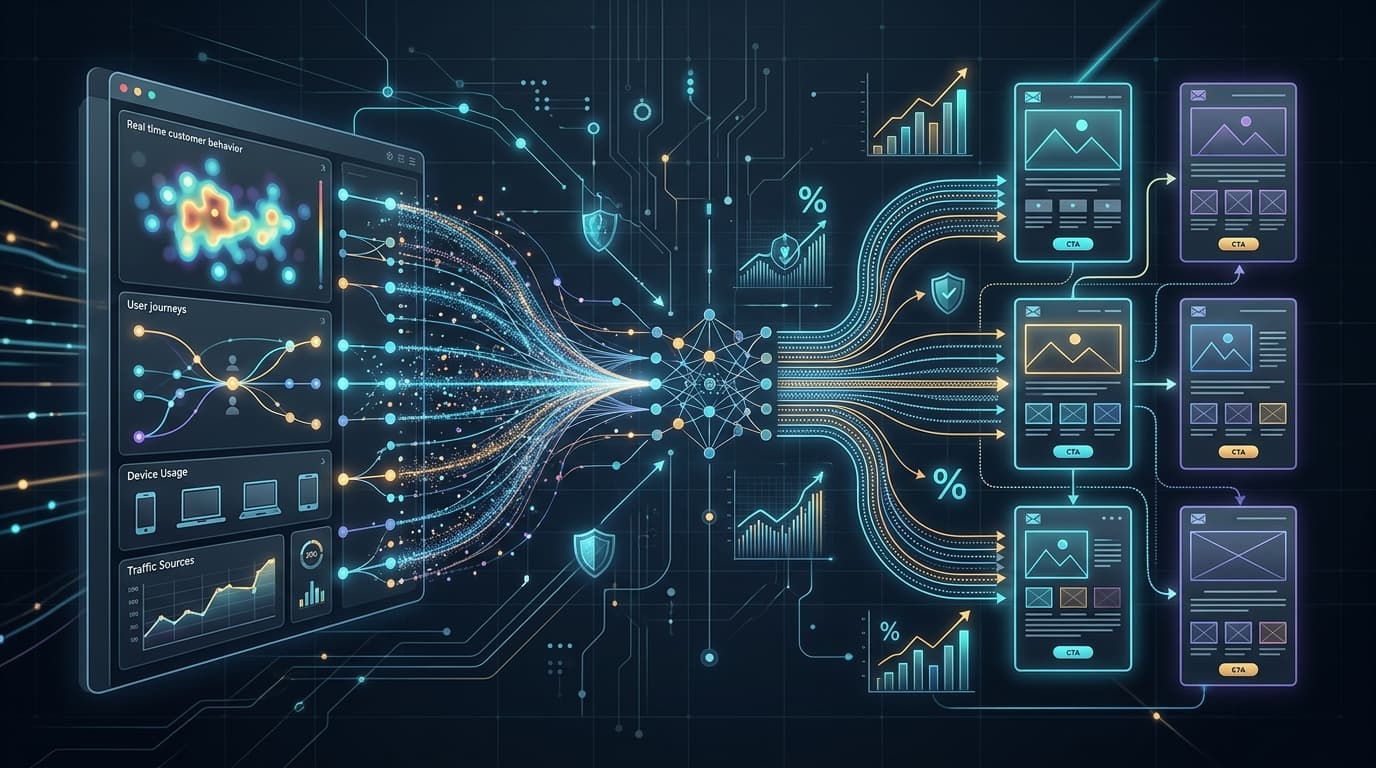
In today's digital landscape, consumers are no longer satisfied with generic communications. They expect highly relevant messages, personalized based on their interactions and preferences. For ecommerce operators, this is not just a desire, but a strategic necessity. Manual segmentation of email lists is inefficient and unsustainable, especially for large product catalogs and growing customer bases. This is where advanced email segmentation automation comes into play, a powerful lever to maximize engagement and conversions, transforming your email marketing from a cost center into a profit center.
This article is a practical guide for entrepreneurs and technical marketers who want to go beyond the basics, configuring automated flows for hyper-personalized messages, respecting data privacy, and leveraging the potential of first-party data. In 2026, advanced marketing automation platforms offer sophisticated tools to make personalization an accessible and effective reality.
The Era of Generic Emails is Over: Why Advanced Segmentation is Essential
Related deep dives: Leveraging Server-Side Data for Hyper-Personalized Email Segmentation and Advanced E-commerce Automations · Hyper-Personalized Email Automations with Server-Side Tracking: The Ultimate E-commerce Guide
Email marketing remains one of the most effective channels for ecommerce, with an ROI that surpasses many other digital investments. However, its potential is often limited by an outdated approach: sending undifferentiated newsletters to entire lists. This not only leads to low open and click rates but can also damage sender reputation and increase unsubscribe rates.
Modern consumers are bombarded with information and have developed a "filter" for irrelevant content. An email that doesn't resonate with their specific interests or current buying journey is ignored or, worse, marked as spam. Advanced segmentation solves this problem by allowing you to speak directly to specific niches of your audience with messages that truly matter. This is no longer a luxury but a fundamental component of any successful email marketing strategy.
The Problem with Static Lists and the Opportunity of Real-Time Personalization
Many ecommerce businesses still rely on rudimentary segmentation based on demographic or static historical data. While a start, this approach fails to capture the dynamism of user behavior. A customer who visited a product page an hour ago has different needs than one who hasn't purchased in six months. Real-time personalization, based on immediate user actions, is what distinguishes successful campaigns.
Imagine being able to send an email with related products to a user who just viewed a specific category, or a reminder for an abandoned cart with a targeted offer, just minutes after abandonment. These are the opportunities that real-time segmentation unlocks, transforming the user experience and driving conversions that would otherwise be lost. Modern marketing automation platforms, like those we implement at AE Digital Agency, are designed to handle this complexity, allowing you to react instantly to your customers' behavior.
First-Party Data and Privacy: The Foundation of Effective Segmentation
With the evolution of privacy regulations (such as GDPR and CCPA) and the progressive deprecation of third-party cookies, first-party data has become the most valuable asset for personalization. This is the data you collect directly from your customers through their interactions on your website, purchases, subscriptions, and declared preferences (zero-party data).
A robust infrastructure for collecting and managing first-party data is the pillar of any advanced segmentation strategy. This includes implementing a server-side tracking system, integrating a Customer Data Platform (CDP) or an advanced CRM, and ensuring all processes are privacy-compliant. Respecting privacy is not just a legal obligation, but a key factor in building trust and loyalty with your customers. Transparency about how data is used to improve their experience is fundamental.
How to Build Automated Email Segmentation Workflows for Ecommerce
Implementing automated segmentation requires strategic planning and precise technical configuration. Here are the key steps:
- Define Objectives: What behaviors do you want to encourage? What problems do you want to solve (e.g., abandoned carts, low purchase frequency)?
- Identify Key Data Points: Which first-party data points are relevant to your objectives? (e.g., product views, add-to-carts, previous purchases, preferred categories, customer lifetime value - CLV).
- Choose Your Marketing Automation Platform: Select a robust platform that supports deep integration with your ecommerce and offers advanced automation and segmentation features (e.g., Klaviyo, Braze, Salesforce Marketing Cloud).
- Create Dynamic Segments: Instead of static lists, create segments based on behavioral rules that update in real-time. Examples: "users who visited X category in the last 7 days but did not purchase," "customers who bought Y product and are due for a re-purchase," "new subscribers who opened the first email but not the second."
- Design Automated Workflows: For each segment, design a series of personalized emails with triggers, delays, and logical conditions.
Practical Examples of Behavioral Segmentation
- Advanced Abandoned Cart: Not just one email, but a sequence of 2-3 emails with dynamic content based on items in the cart, complementary product suggestions, and, if necessary, a personalized incentive after a certain period.
- Browse Abandonment: Emails sent to users who have viewed specific products or categories multiple times without adding to the cart. Content can include viewed products, popular alternatives, or reviews.
- Post-Purchase and Cross-Selling/Up-Selling: Emails that follow a purchase, offering support, requesting reviews, or suggesting complementary products or premium versions based on the previous purchase.
- Inactive Customers (Win-Back): Segment customers who haven't purchased for a certain period and send re-engagement campaigns with special offers, new arrivals, or surveys to understand their needs.
- Segmentation by Customer Lifetime Value (CLV): Treat high-value customers differently, offering sneak peeks, exclusive discounts, or dedicated customer service.
Common Mistakes in Segmentation Automation and How to Avoid Them
Even with the right tools, it's easy to fall into common traps:
- Over-Segmentation: Creating too many segments can dilute efforts and make management complex. Start with the most impactful segments and scale up.
- Ignoring Data Quality: Dirty or incomplete data leads to inaccurate segmentation and irrelevant messages. Invest in data cleansing and integrity.
- Lack of A/B Testing: Don't assume a message will work. Constantly test subject lines, content, CTAs, and timing to optimize performance.
- Forgetting Segment Exclusions: Ensure a user doesn't receive emails from multiple flows simultaneously, creating confusion or over-communication.
- Disregarding Frequency: Bombarding users with too many emails is the quickest way to lose subscribers. Set frequency limits and consider user preferences.
- Not Updating Dynamic Content: Personalized content must always be up-to-date and relevant. An out-of-stock product in an automated email is a lost opportunity.
Measuring Impact and Optimizing Your Strategies
Automation is not a "set-and-forget" operation. It's crucial to constantly monitor key metrics to understand the effectiveness of your strategies and make improvements. Metrics to watch include:
- Open Rates: Indicates the effectiveness of the subject line and segment relevance.
- Click-Through Rates (CTR): Measures the interest generated by the content and CTA.
- Conversion Rates: The number of purchases or desired actions completed after clicking the email.
- Average Order Value (AOV): Advanced segmentation can positively influence AOV through targeted cross-selling and up-selling.
- Customer Lifetime Value (CLV): An increase in CLV is a key indicator of successful personalization and increased loyalty.
- Unsubscribe Rates and Spam Reports: An increase in these metrics indicates that your messages are not relevant or are too frequent.
Use data to iterate and optimize. If a segment doesn't perform as expected, analyze behavior, review content or timing, and test new hypotheses. In-depth analysis is the key to unlocking the true potential of your email marketing strategy.
When to Seek Expert Support for Marketing Automation
Implementing an advanced email segmentation automation system can be complex, especially for ecommerce businesses with large data volumes or very specific personalization needs. It requires technical expertise in platform integration, data management, complex workflow configuration, and performance analysis.
If your internal team lacks the necessary resources or experience, or if you want to accelerate implementation times and ensure a "best practice" approach from the start, it's wise to consider the support of a specialized agency. An external partner can help you to:
- Evaluate and select the marketing automation platform best suited to your needs.
- Integrate the platform with your ecommerce and other systems (CRM, CDP).
- Configure first-party data tracking in a privacy-compliant manner.
- Design and implement complex automated workflows.
- Provide training to your team and ongoing support for optimization.
AE Digital Agency: Your Partner for Advanced Automation
At AE Digital Agency, we specialize in implementing marketing automation solutions and email marketing services that generate concrete results for ecommerce. Our approach is implementation-focused, privacy-conscious, and conversion-oriented, providing tailored strategies that transform data into sales. We work with you to build a robust infrastructure that supports effective and scalable real-time personalization.
Conclusion: Transform Your Email Marketing with Intelligent Personalization
Advanced email segmentation automation is not just a trend, but an essential component for the long-term success of any ecommerce business. It allows you to overcome the limitations of generic communications, offering personalized experiences that resonate with each individual customer. Investing in this technology and its associated strategies means investing in greater engagement, higher conversion rates, and increased customer loyalty.
Don't let your ecommerce fall behind. Start exploring the potential of real-time personalization today. If you're ready to take your email marketing to the next level and want a partner to guide you through every stage of implementation, contact us. We are here to help you build a system that not only works but excels.
Related articles
Leveraging Server-Side Data for Hyper-Personalized Email Segmentation and Advanced E-commerce Automations
Discover how server-side tracking revolutionizes data collection for e-commerce email marketing, enabling ultra-precise segmentation, smart automations, and improving deliverability and ROI while respecting privacy.
Hyper-Personalized Email Automations with Server-Side Tracking: The Ultimate E-commerce Guide
Discover how server-side tracking revolutionizes e-commerce email automations, ensuring robust first-party data, privacy compliance, and unparalleled customer engagement. Maximize CLTV with advanced strategies.
AI-Powered Hyper-Personalization in Email Marketing: Dynamic Content & Advanced Segmentation
Generic email campaigns are failing. Discover how AI can transform your email marketing with dynamic content and advanced segmentation, boosting engagement and conversions.